A Shared Beginning: St George's and Uplands
Ninety-odd years on, the church built by six families and the school built by the same six families are still doing the thing they were built to do, and still doing it together.
1920s
A Shared Beginning
White River in the 1920s was a young place. A settlement for ex-servicemen established by Lord Milner in 1909 had failed, then been resurrected after the First World War as the White River Estates. Settlers arrived, many of them British, and with them came two needs that tend to arrive together: a school for their children and a church for themselves.
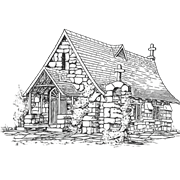
The school came first. In 1928 Matilda Fuller, a newly arrived and well qualified teacher, opened her home to six pupils. The following year a committee of residents set about raising money for an Anglican church. White River Estates donated the land. The architect, Mr Fleming, had been a pupil and later a partner of Sir Herbert Baker, and chose dressed stone as his medium. Granite was quarried from the Campbell Ross farm opposite the church that stands today.
The same handful of families built both. That is the root of the relationship, and it explains why neither institution was ever quite separate from the other.
1954 to 1980
The Chapel That Took Twenty-Six Years
The formal Anglican character of the school arrived through one person. The Reverend Jos Driver came to Uplands in the early 1950s. At his first prize giving in 1954 he thanked the Bishop for bringing him there, and said that the thing he most hoped to do was build a chapel. It had always been, in his words, the crown of his hopes and plans.
He did not see it finished during his time at the school. He left in 1963, and the chapel and hall opened in 1980, built in his honour. His ambition outlasted his tenure, which is a fair description of how faith usually works.
Ethos
The Mark of the Church on the School
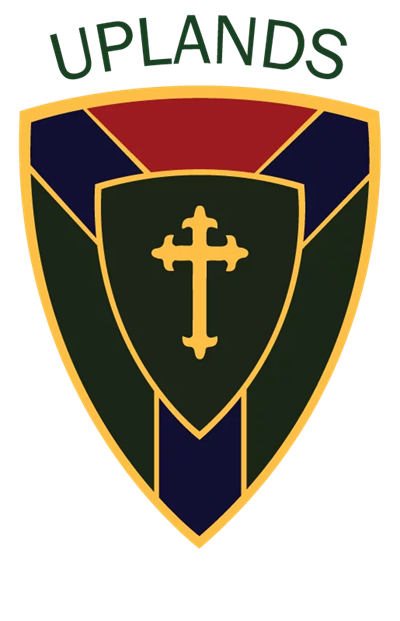
The Anglican inheritance is visible in the fabric of Uplands. In the school crest, the branching Y represents the Preparatory and the College flowing from a shared ethos, and the cross at its centre represents the role the Church played in shaping that ethos. Bishop House is named for Bishop Robin, one of the founding figures of the College, who died in 2002. Its house colour is red, the colour of Holy Week and of Pentecost.
The Anglican Church is represented on the Uplands Board of Directors alongside past pupils and parents.
Today
The Partnership Today
St George's is the parish of Uplands. Our Rector leads Eucharist services at the school, takes part in campus life, and knows the pupils and staff by name. The school's Chaplain carries the daily pastoral work on the ground. The two clergy meet each week to plan, reflect and support one another.
The relationship continues to grow. Boarders are being welcomed into parish worship on Sundays. Quarterly joint services bring the school choir and pupils into St George's. Pupils and parishioners visit local old age homes together. Each year the Carols Evening opens the celebration to the whole of White River, including elderly residents who might otherwise spend the season alone.
Uplands welcomes pupils of every background and belief, and asks none of them to be anything other than themselves. What the school offers, and what St George's helps to hold, is the opportunity to encounter Christian values honestly and to work out where one stands.
Ninety-odd years on, the church built by six families and the school built by the same six families are still doing the thing they were built to do, and still doing it together.